- MORE ABOUT OUR NEWS
- CALL 412-882-8346

- ASK ABOUT LEASE-TO-OWN OPTIONS


Blackout and Two-Tone Builds: Chrome Delete, Roof Wraps and Color Accents
Want your vehicle to look more aggressive, cleaner and a little more custom without going completely over the top? A blackout or two-tone build might be exactly the move.
And here’s the thing: the best-looking builds usually aren’t the ones with the most stuff. They’re the ones with the best design balance.
You don’t need every badge blacked out, five accent colors and a giant graphic package. You need a plan. Start with the vehicle’s silhouette, decide what should visually disappear, then add contrast where it actually makes sense.
At Team Nutz, we’ve been helping Pittsburgh-area owners build better-looking cars, trucks, SUVs, motorcycles and more for 25 years. Founded in January 2001, we know the difference between a finished custom look and a project that feels kinda halfway done.
START WITH THE SILHOUETTE, NOT THE DETAILS
Before you touch the badges or mirror caps, look at the vehicle from 20 feet away.
What changes its overall shape and attitude?
Usually, it’s:
- Wheels and tires
- Ride height and stance
- Window tint
- Roof color
- The contrast between the body and trim
These elements affect the entire silhouette. A set of black wheels can make a vehicle look lower. A dark roof can visually shrink the top half of a sedan. Window tint can tie the glass, roof and wheels together into one clean theme.
That’s why we usually recommend this order:
- Choose the main visual direction: stealth, sporty, luxury, rugged or high-contrast.
- Set the foundation with wheels, tires and stance.
- Build the main contrast with a roof wrap, chrome delete or other large-area change.
- Add window tint to connect the dark areas.
- Finish with small details like badges, calipers, mirror caps or interior accents.
If you start with tiny details first, those details can get completely overwhelmed by the rest of the vehicle. Nobody wants to spend money blacking out a badge just to realize the wheels, roof and bright trim are all fighting for attention. That’s how the “almost finished” look happens.
CHROME DELETE: WHAT IT ACTUALLY MEANS
A chrome delete is the process of covering or replacing bright exterior trim so the vehicle has a darker, more unified appearance.
Depending on the vehicle, that can include:
- Window beltline and surround trim
- Grille trim
- Badges and emblems
- Mirror caps
- Door-handle trim
- Roof rails
- Exhaust surrounds
- Other bright accent pieces
There are three common approaches:
Vinyl wrap
Wrapping is usually the most flexible option. Premium vinyl can create a gloss black, satin black, matte black, carbon-style or other finish without permanently changing the original trim.
It’s also reversible, assuming the underlying surface is in good condition and the material is removed properly. That matters on newer vehicles, leased vehicles and anything you may want to return to stock later.
Paint
Painting can be a good option for parts that are difficult to wrap or that need a permanent finish. But paint requires more preparation, is harder to reverse and can involve removing, sanding and refinishing the original trim.
Replacement trim
Some vehicles offer factory-style black trim or aftermarket replacement pieces. This can be a clean solution, but fitment, availability and cost vary a lot from one vehicle to another.
A professional chrome delete isn’t just “stick some black vinyl on it.” The trim may need to be cleaned, prepared, removed or partially disassembled so the edges finish correctly. Premium materials from 3M and Avery Dennison help, but installation quality still matters big time.
ROOF WRAPS AND THE TWO-TONE EFFECT
A gloss black roof wrap is one of the most popular two-tone upgrades for a reason: it makes a surprisingly big difference.
On a white, silver, red or blue vehicle, a black roof creates a strong horizontal break. Visually, it can make the roof look lower and the body look longer. On sedans and crossovers, it often gives the vehicle a sleeker, more premium shape without changing the factory paint.
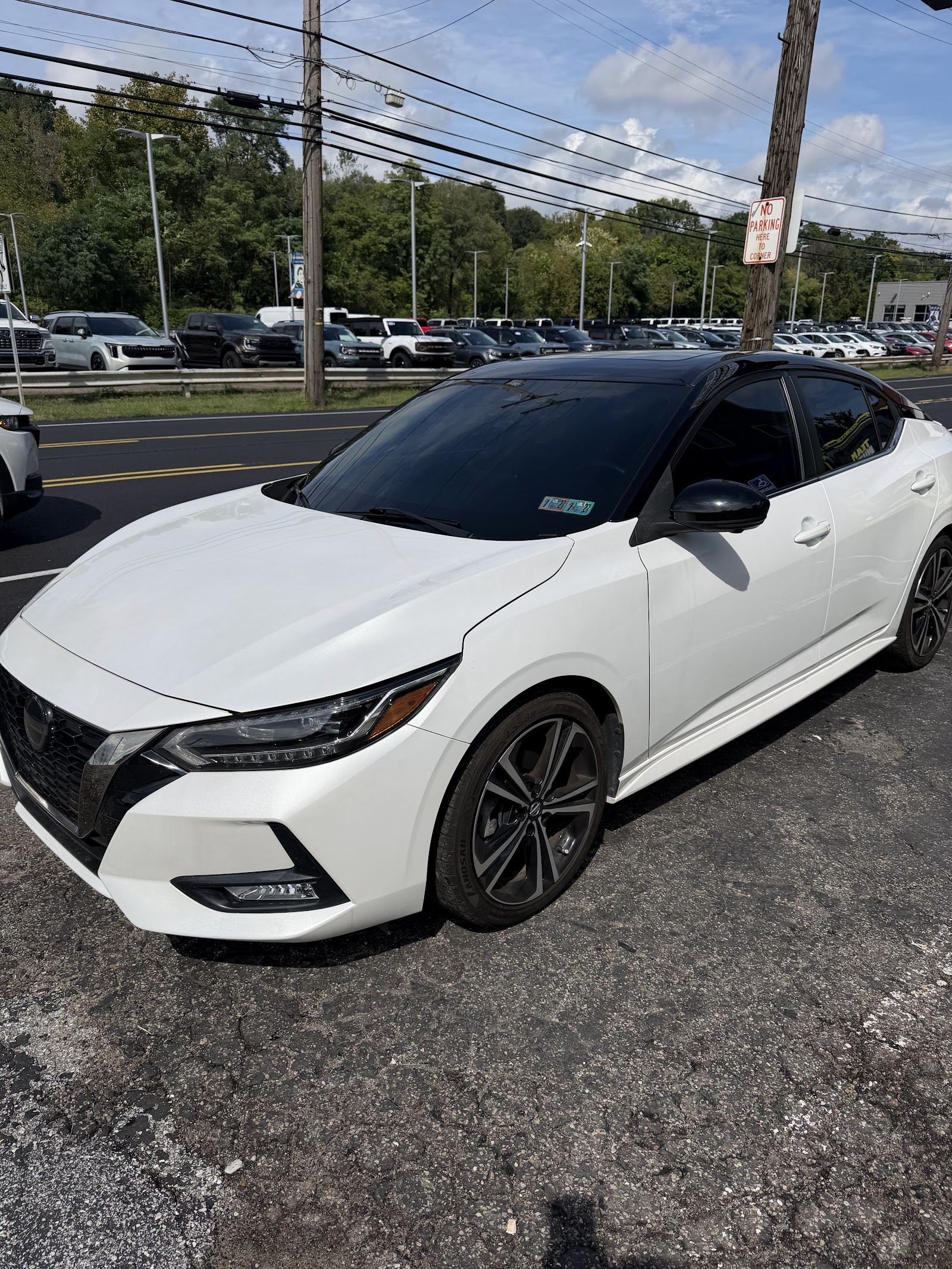
Our white Nissan Sentra is a great example. The black roof, black mirrors, dark wheels and tinted glass work together as one design, not four random modifications.

A roof wrap is also a smart choice when you want the two-tone look without committing to a permanent repaint. It can be removed later, which is helpful for resale, lease returns or simply changing your mind down the road.
Just remember: roofs are horizontal surfaces. They receive more direct sun and weather than vertical panels. A premium roof wrap commonly delivers about 3–5 years of strong appearance in Pennsylvania, depending on parking, maintenance and exposure. Garage parking and proper washing can help extend its life.
BLACK WHEELS, DARK ACCENTS AND PROPORTION
Black wheels can make a vehicle look lower and more planted because they visually blend with the tires. But wheel finish and size still need to match the rest of the build.
A few design questions to ask:
- Is the body color bright enough to support a full blackout?
- Should the wheel be gloss black, satin black or machined with black accents?
- Does the wheel size fill the wheel opening properly?
- Are there still bright trim pieces that interrupt the theme?
- Do the wheels work with the roof and window tint?
The most common mistake is leaving one major chrome element untouched. A black roof, black wheels and dark tint can look excellent, but one bright grille surround or large chrome window trim piece may suddenly become the first thing you notice.
That doesn’t mean every part must be black. It means the bright pieces need to look intentional.
TINT AS PART OF THE DESIGN
Window tint is not just about privacy or cabin comfort. It’s one of the main visual elements in a two-tone build.
Tint helps connect:
- The black roof
- The glass
- The mirrors
- The wheels
- The lower body accents
Premium ceramic film can also look noticeably different from inexpensive dyed film. It tends to deliver a cleaner appearance, stronger heat rejection and better long-term color stability. The exact shade should be selected based on your vehicle, glass color, legal requirements and how dark you want the overall build to read.
Pennsylvania owners need to pay attention here. PennDOT’s practical inspection standard generally requires at least 70% visible light transmission for most passenger-car windows, while SUVs, trucks and multipurpose vehicles may have different rules for rear windows. The combined glass-and-film measurement matters, not just the film’s advertised percentage. Check the current PennDOT window tint fact sheet, and ask questions before installing.
COLOR ACCENTS: ONE STRONG NOTE BEATS FIVE WEAK ONES
A blackout build doesn’t have to be all black. In fact, one carefully chosen accent color can make the whole vehicle feel more custom.
Good places for a single color accent include:
- Brake calipers
- Tow hooks
- Interior trim
- Seatbelts or stitching
- Mirror details
- Brake ducts
- Small grille inserts
Red, bronze, lime green, blue and orange can all work, but the accent needs to repeat or support something else. A small red caliper detail may look sharp with red interior stitching. A bronze wheel accent can work with warm exterior paint.
The goal is contrast with control. If every part gets a different color, the design gets noisy fast. You want people to notice the build as a whole, not play “find the next random accent.”
WRAPS VS. PAINT FOR WHOLE-VEHICLE CHANGES
For a complete color change, both wrapping and painting can produce excellent results. The better choice depends on what you value most.
A quality vinyl wrap:
- Is generally faster than a full repaint
- Is reversible
- Offers gloss, satin, matte, metallic and specialty finishes
- Can help protect the factory finish from everyday exposure
- Typically costs less than a high-quality color-change repaint
A quality full wrap for many passenger vehicles may range from roughly $2,500 to $5,000 or more, depending on vehicle size, material, design complexity and preparation.
A professional repaint:
- Can last longer when properly prepared and finished
- Is better for permanent color changes or body repairs
- Requires more extensive preparation
- Is difficult and expensive to reverse
A quality full repaint can easily run $5,000 to $10,000-plus, especially when the job includes extensive disassembly, jambs, bodywork or a specialty finish.
Neither option is automatically “better.” If you want a dramatic look that you may change later, wrapping is often the smarter investment. If the vehicle needs permanent body restoration, paint may be the right project.
THE REVERSIBILITY ADVANTAGE
This is where wrap-based customization really earns its place.
You can build a vehicle that looks completely different today, and still preserve the option to return it closer to stock tomorrow. That’s a major advantage for:
- Leased vehicles
- Newer vehicles
- Daily drivers
- Vehicles with desirable factory paint
- Owners who like changing styles
- Resale-conscious builds
At Team Nutz, our certified technicians use premium materials and offer an in-house lifetime warranty on qualifying work. Our team handles vinyl wraps, graphics, chrome delete, window tint, wheels and tires, and more.
For commercial vehicles, Rally Specialist applies the same wrap expertise to fleet graphics and business branding. This construction truck shows how a strong visual design can turn a work vehicle into a rolling business card.

Need materials for a DIY project? DIY Customs offers wrap film, trim accessories and wheels online, with free shipping on orders over $200 and a vehicle selection tool to help you find the right products. For home and business aesthetics, security window film and related solutions are also available through TN Security.
The best blackout or two-tone build isn’t about copying someone else’s vehicle. It’s about understanding proportion, contrast and reversibility, then choosing upgrades that make your vehicle look like the version you had in your head.
How long does a vinyl roof wrap last?
A premium vinyl roof wrap typically looks its best for about 3–5 years in Pennsylvania, although direct sun, outdoor parking, washing habits and material quality can shorten or extend that range. Horizontal surfaces usually age faster than vertical panels, so proper care really matters.
How much does a chrome delete cost?
A basic chrome delete may run approximately $250–$500, while a more extensive job involving window trim, grille pieces, mirror caps and badges may range from $500–$900 or more. The final price depends on the vehicle’s trim complexity, disassembly needs, film finish and condition of the original surfaces.
Is a wrapped roof cheaper than painting it?
Usually, yes. A professional wrapped roof commonly costs around $500–$1,200, while painting can cost more once preparation, removal, refinishing and clearcoat work are included; wrapping also has the major advantage of being reversible.
READY TO PLAN YOUR BUILD?
Bring us the vehicle, the inspiration photos, or just the “I want it to look meaner, but not goofy” idea. We can help you figure out what to do first and where to spend your budget.
Team Nutz LLC
3287 Library Road
Pittsburgh, PA 15234
Phone: 412-882-8346
Email: sales@teamnutztechnology.com
Business hours:
Monday–Friday: 9 AM–6 PM
Saturday: 9 AM–2 PM
Sunday: Closed
Our 24/7 call center is available for message intake, with a callback on the next business day. CALL/TEXT OR SEND US YOUR PROJECT IDEA: LET’S BUILD SOMETHING CLEAN!!!