- MORE ABOUT OUR NEWS
- CALL 412-882-8346

- ASK ABOUT LEASE-TO-OWN OPTIONS


Sunday Reset: A Pre-Winter Walkaround Checklist
A chilly Sunday is a pretty good time to give your car a little attention. Before the first hard freeze turns a small issue into a really inconvenient one.
You don’t need a full afternoon or a garage full of tools. Set aside 10 minutes, walk around your vehicle, and look for the basics: lights, wipers, tires, battery signs, heat and defrost. That’s it. A simple winter car checklist can help you spot something that needs attention while you’ve still got time to make a plan.
And if you’ve already been thinking about winter tires or washing off autumn grime, this is a nice next step in your pre-winter car care routine. Easy does it. No big production. Just a quick reset!
Your 10-minute pre-winter walkaround
Pick a safe, level spot and switch the car off before you begin. You’re checking what you can see and test easily, not crawling underneath the vehicle or taking anything apart. If something looks damaged, loose, or just not right, make a note and get it checked by a professional.
Minute 1–2: Check your lights
As the days get shorter, working lights matter even more. Walk around your car and check:
- Headlights, both low and high beams
- Brake lights
- Turn signals, front and rear
- Reverse lights
- Fog lights, if your vehicle has them
Ask someone to help with the brake and reverse lights, or check them safely using a reflection. Keep the vehicle parked and secured while testing. If a light is out, flickering, or looks dim compared with the other side, don’t ignore it. A burned-out bulb, cloudy lens, or electrical issue may need attention before dark, wet winter drives become routine.
Minute 3–4: Look over the wipers and washer fluid
Turn on the wipers and see how they move across the glass. Watch for streaking, skipping, chatter, cracks, or missed patches. Those are all signs your blades may not be clearing the windshield well enough.
Then check the washer-fluid reservoir. Top it off with washer fluid rated for freezing temperatures: summer fluid may not be suitable once the weather drops below freezing. A clear windshield isn’t a bonus feature when you’re driving through slush; it’s part of being able to see the road.
If your windshield is hazy or your glass could use a proper clean, explore Team Nutz auto detailing. A clean cabin and clear glass make those dark winter commutes feel a little less grim.
Minute 5–6: Check tire tread and cold pressure
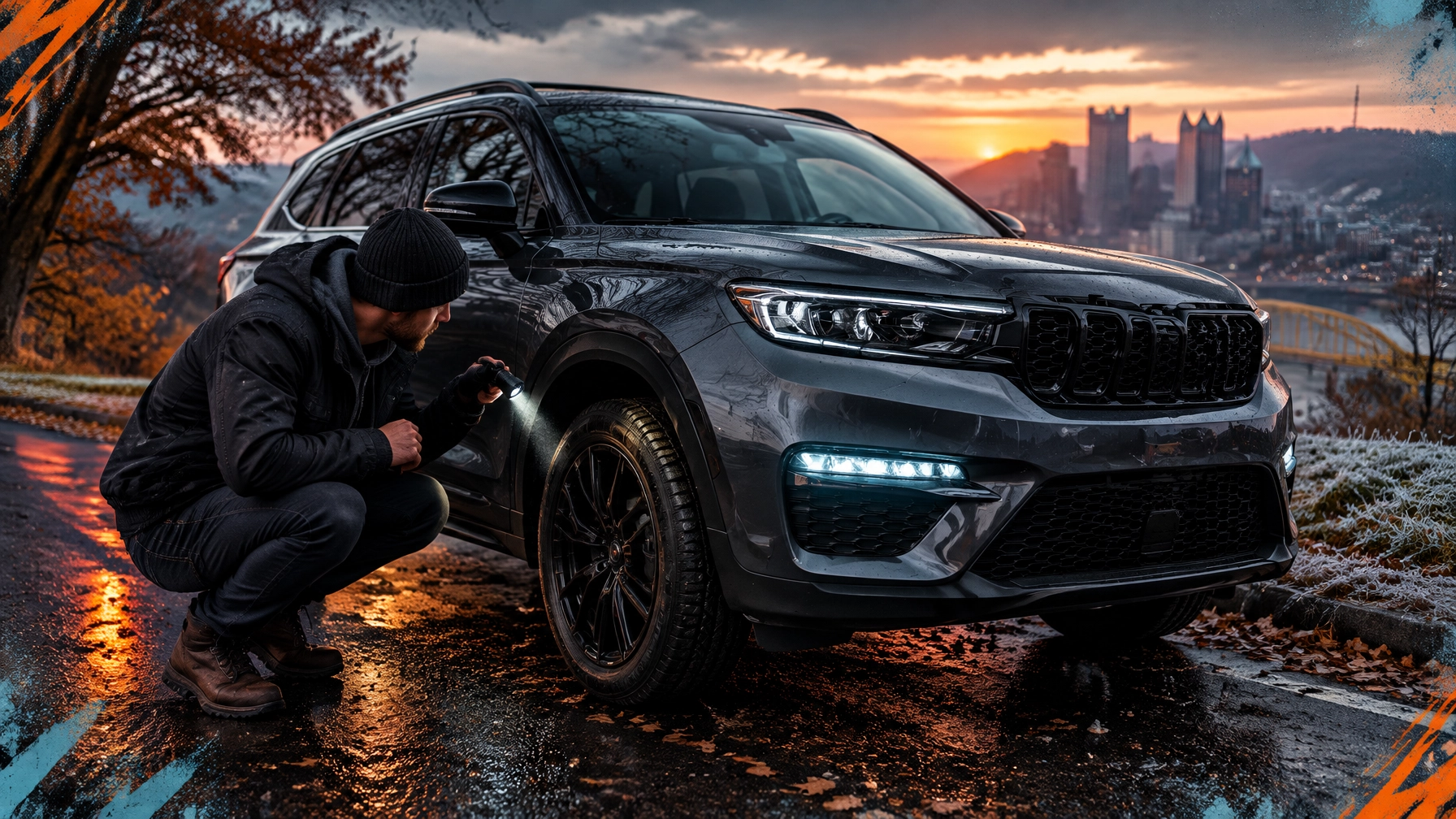
Take a look at each tire. Check for visible damage, uneven wear, or tread that looks low. Then check the tire pressure when the tires are cold, before driving, if possible.
Cold weather affects pressure. As a general rule, tire pressure can drop by about 1 PSI for every 10°F decrease in temperature. So if your tire-pressure light comes on when the weather turns colder, it may be responding to a pressure drop. Use the recommended cold pressure listed on your vehicle’s door-jamb label or in the owner’s manual, not the maximum pressure printed on the tire sidewall.

If you spot a nail, a bulge, a cut, or unusually worn tread, don’t treat a quick air-up as a fix. Get the tire assessed. And if you’re already planning a winter tire changeover, this is a good moment to check that project off your list before the weather gets serious.
Minute 7–8: Notice how your battery is behaving
You don’t need to remove or disconnect anything. Just think back to the last few starts. Does the engine crank more slowly than usual? Has the car needed a jump? Do you know the battery is getting older, or have you noticed corrosion around the connections?
Cold weather can put extra strain on a battery that’s already weak. A slow crank is worth taking seriously, not because it guarantees a failure, but because it’s a sign to have the battery and charging system checked before a freezing morning makes the problem harder to ignore.

If you see heavy corrosion or anything that looks damaged, leave it to a professional. Don’t poke around under the hood if you’re unsure what you’re looking at. The goal here is to notice a possible issue, not to turn a Sunday check into an electrical project.
Minute 9–10: Test your heater and defrosters
Start the vehicle and check that the heater blows warm air. Test the front and rear defrosters, too. Make sure the controls respond and the airflow reaches the glass as expected.
A defroster that doesn’t clear the windshield properly is easy to put off when the weather is mild. It’s a lot less fun to discover the problem when you’re running late on a frosty morning. If the heat is weak, the defroster isn’t working, or something seems unusual, arrange a professional inspection.
Why do this now, not during the first freeze?
Because the first hard freeze always feels farther away than it is. Then suddenly you’re scraping the windshield, leaving in the dark, and hoping those wipers will clear the road spray.
A quick walkaround gives you a chance to catch the small stuff before you’re counting on it. A weak battery may show itself as slow cranking. Worn wipers may leave streaks right when the windshield is wet and visibility is poor. Low tire pressure can trigger a warning as temperatures fall. And a heater or defroster problem becomes a whole lot more noticeable when the glass is fogging up.
This checklist is a useful first look, but it does not replace a professional inspection. If you find visible damage, persistent warning lights, an electrical issue, poor tire condition, or trouble with your heating and defrost, get it checked. A checklist can help you spot a concern; it can’t diagnose or repair the cause.
Make winter mornings more comfortable
Once the essentials are checked, you can think about comfort upgrades for the season. A professionally installed remote starter can help you warm up the cabin before you head out. If that’s on your wish list, plan ahead of the November/December rush so you have time to discuss options and schedule your project.
Want to make the cold commute more comfortable once you’re in the car? Heated seats pair naturally with remote start for a cozier ride on chilly mornings. These are investments in your everyday drive, not a substitute for the basic maintenance checks, but a great way to make winter feel a little more manageable.
For DIY supplies and accessories, visit DIYCustoms.store. Free shipping is available on orders over $200.
Your Sunday reset, in one quick list
Before you call it done, make sure you’ve:
- Checked headlights, brake lights, turn signals, reverse lights, and fog lights
- Looked over your wipers and topped up freezing-temperature-rated washer fluid
- Inspected tire tread and checked cold tire pressure against your vehicle’s recommended number
- Noted any battery age or slow-crank signs
- Tested your heater and front/rear defrosters
- Booked a professional check if anything seems wrong
That’s a solid 10-minute reset, and a much better plan than waiting for a problem to pick the coldest morning of the year to show up. Welcome to the TEAM!!! Team Nutz has served drivers since January 2001, marking 25 years in business in 2026. Our shop has a 4.9-star rating and 1,200+ reviews, MECP-certified technicians, and an in-house limited lifetime warranty on qualifying work.
We’re at 3287 Library Road (Route 88), Castle Shannon / South Hills of Pittsburgh, PA 15234. Call 412-882-8346 or email sales@teamnutztechnology.com. Our hours are Monday–Friday, 9–6; Saturday, 9–2; Sunday, closed. Our call center is available 24/7 to take a message, with a callback the next business day.
How do I prepare my car for the first freeze?
Check your lights, wipers, washer fluid, tire tread and cold pressure, battery starting behavior, heater, and defrosters. If anything looks damaged or isn’t working properly, arrange a professional inspection before the weather gets colder.
What should I check on my car in November?
In November, take a quick look at the tires, lights, wiper blades, washer fluid, battery signs, and heating and defrost systems. It’s also a smart time to plan any winter service or comfort upgrades before the November and December rush.
Why does my tire pressure light come on when it gets cold?
Cold temperatures can lower tire pressure. About 1 PSI for every 10°F drop is a common rule of thumb. Check pressure when the tires are cold and inflate to the vehicle manufacturer’s recommended level on the door-jamb label or in the owner’s manual.