- MORE ABOUT OUR NEWS
- CALL 412-882-8346

- ASK ABOUT LEASE-TO-OWN OPTIONS


One-Way vs Two-Way Remote Start: Which Do You Need?
Remote start is all about getting your vehicle ready before you hop in. But when you’re comparing systems, one question comes up fast: one-way or two-way?
Here’s the plain-language version: one-way sends a command to your car. Two-way sends the command and lets the remote receive a confirmation back. That little difference can matter a lot when you can’t see where you parked.
At Team Nutz, we’ll help you match the system to how you park, and how you use your vehicle day to day. Because a warm car beats a fob in a box any winter morning!
We install remote starters right here in Castle Shannon on Library Road (Route 88), and drivers come to us from all over the South Hills and beyond: Mt. Lebanon, Bethel Park, Upper St. Clair, Whitehall, Brentwood, Baldwin, Pleasant Hills, Dormont, Brookline, plus Canonsburg, Robinson, Cranberry and Monroeville. Same-day questions welcome, just call!
One-Way Remote Start: You Press, Your Car Gets the Command
With a one-way remote, you press the button and the remote sends a start command to your vehicle. The command goes out, but there’s no confirmation coming back to the remote. If the car starts, the fob won’t tell you. You’ll need to see or hear the vehicle, or check it in person.
A one-way system can be a good fit if you park close by, with a clear line of sight. Think driveway, nearby garage, or an open lot where you can spot your vehicle easily. You press the button, look for the vehicle’s response, and head out when it’s ready.
Want the essential remote-start function with a simple remote? Avital has a one-button, one-way option with a range of up to 500 feet. There’s also an Avital one-way remote-start option with keyless entry and a range of up to 1,000 feet. Depending on the system, features include optional unlock-while-running and compatibility with Directed SmartStart.

One-way may suit you if:
- You usually park where you can see your vehicle.
- You’re comfortable checking the car’s lights or listening for it to start.
- You want remote start’s essential function without needing a confirmation screen.
One detail to remember: range is always “up to” a stated distance. Buildings, concrete, other vehicles, and interference can affect how far the signal travels. A clear path is your friend!
Two-Way Remote Start: Your Remote Gets a Reply
A two-way remote does more than send your request. It can receive a signal back from the vehicle, giving you confirmation that the system received the command and reports that the vehicle started. Depending on the remote, you’ll see an LED indicator or a message on an LCD display.
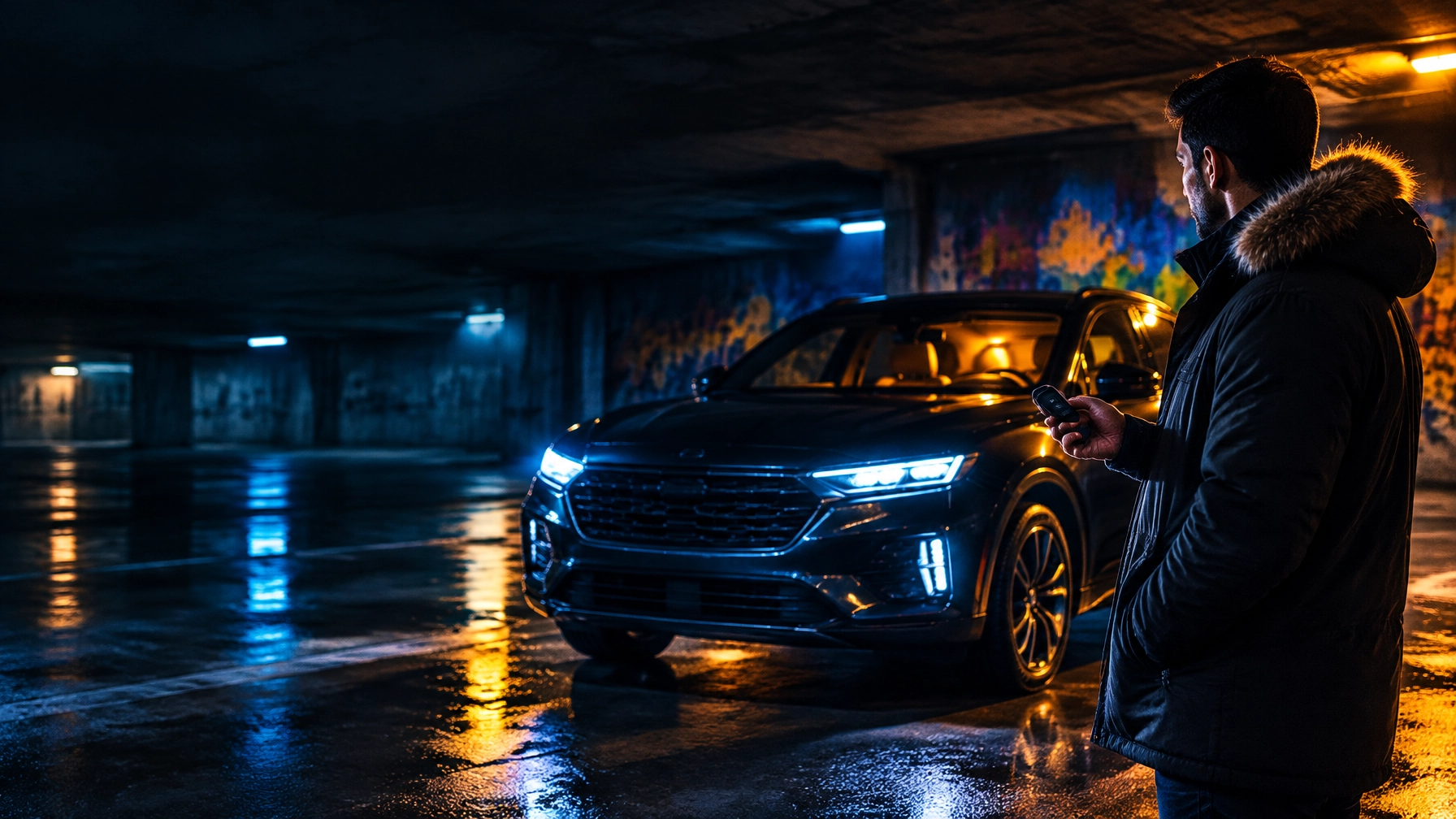
That reply can take the guesswork out of starting a car you can’t see. It’s handy when your vehicle is parked at work, across a large lot, behind a building, or in a parking structure. If you’ve ever walked out to a cold car after thinking you’d started it, you already know why confirmation can be a welcome feature.

One Viper option is a two-way, four-button LCD remote with a range of up to 2,000 feet. It includes two remotes, one two-way and one one-way, and includes an alarm. An optional horn output is available, and the system is compatible with Viper SmartStart.
Up to 2,000 feet doesn’t mean every parking spot will work at that distance. Walls, levels of a parking garage, and other obstructions can limit the signal. Two-way gives you feedback when the signal makes it through; it doesn’t make obstacles disappear or guarantee a connection from everywhere.
Match the System to How You Park
Think about your real routine, not an ideal day. Where does your car spend most of its time? Can you see it from the house or office? Is it usually a few steps away, or tucked into a parking structure several floors down?
One-way makes sense when you can check the vehicle yourself. If you park in a driveway or a nearby space, a one-way remote may give you the straightforward experience you want. You’ll send the command, then confirm by looking or listening.
Two-way is worth considering when the vehicle is often out of sight. An LCD or LED response can let you know the system got the message without making you walk outside just to check. But if your parking spot is behind multiple concrete walls or far from where you’ll use the remote, talk through that setup with an installer. Your parking location matters as much as the remote’s listed range.
And don’t forget the bigger goal: warm in winter, cool in summer. Remote start can help get your cabin ready before your drive, so your daily commute starts off a little more comfortably. For a winter comfort project, you can also explore heated seat options.
The Practical Middle Ground: Choose the Features You’ll Use
You don’t have to choose between “basic” and “every feature imaginable.” Start with your parking habits, then consider the options that make sense for your vehicle and routine.
- One-way with keyless entry: Avital offers a one-way option with keyless entry and a range of up to 1,000 feet.
- Two-way feedback: Choose a compatible two-way remote if knowing the command was received matters when your car is out of view.
- SmartStart compatibility: Certain Avital and Viper systems are compatible with their respective SmartStart options. Ask us what’s compatible with your vehicle and setup.
- Security features: The Viper two-way LCD option described above includes an alarm, with optional horn output.
- A mixed remote setup: The Viper package includes one two-way remote and one one-way remote, giving you two different ways to operate the system.
The best pick isn’t about choosing the longest listed range or the most buttons. It’s about finding the setup that fits how you park and what you want your remote to tell you. Distance stops mattering when the system, vehicle, and parking routine work together, and when you know what kind of confirmation to expect.
Want to compare options? Take a look at Team Nutz remote starters, then give us a call. We’ll help you narrow it down for your vehicle.
What to Have Ready When You Call
Have your vehicle’s year, make, model, and trim handy, plus whether it has a keyed or push-button ignition. That info helps us talk through what may work with your vehicle and your day-to-day parking setup.
Welcome to the TEAM!!!
Team Nutz LLC
3287 Library Road, Pittsburgh, PA 15234
CALL/TEXT: 412-882-8346
EMAIL: sales@teamnutztechnology.com
Hours: Mon–Fri, 9–6; closed Sat and Sun
Our call center is available 24/7 to take your message, with a callback the next business day.
We’ve been serving customers since January 2001-25 years in business, and have a 4.9-star rating with 1,200+ reviews. Our MECP-certified technicians use Directechs wiring software and Alldata blueprints, and qualifying work is backed by a 1-year in-house labor warranty, plus the manufacturer’s lifetime warranty on parts. Let’s find the remote-start setup that fits your ride!
Does a two-way remote guarantee my car started?
A two-way remote receives a response from the vehicle’s system, so you can check whether the start command was received and the system reports a start. It isn’t a live view of your car, and signal conditions can affect whether the remote receives that reply.
Is one-way remote start a good fit if I park at home?
It can be, especially if you park nearby and can see or hear the vehicle after sending the command. If your car is out of sight, or you’d rather have confirmation, ask about a two-way option.
Does the listed remote-start range work everywhere?
No. Range is listed as up to a certain distance, and actual performance varies with buildings, parking structures, other vehicles, and signal interference. Tell us where you usually park so we can help you consider the right system for your routine.