- MORE ABOUT OUR NEWS
- CALL 412-882-8346

- ASK ABOUT LEASE-TO-OWN OPTIONS


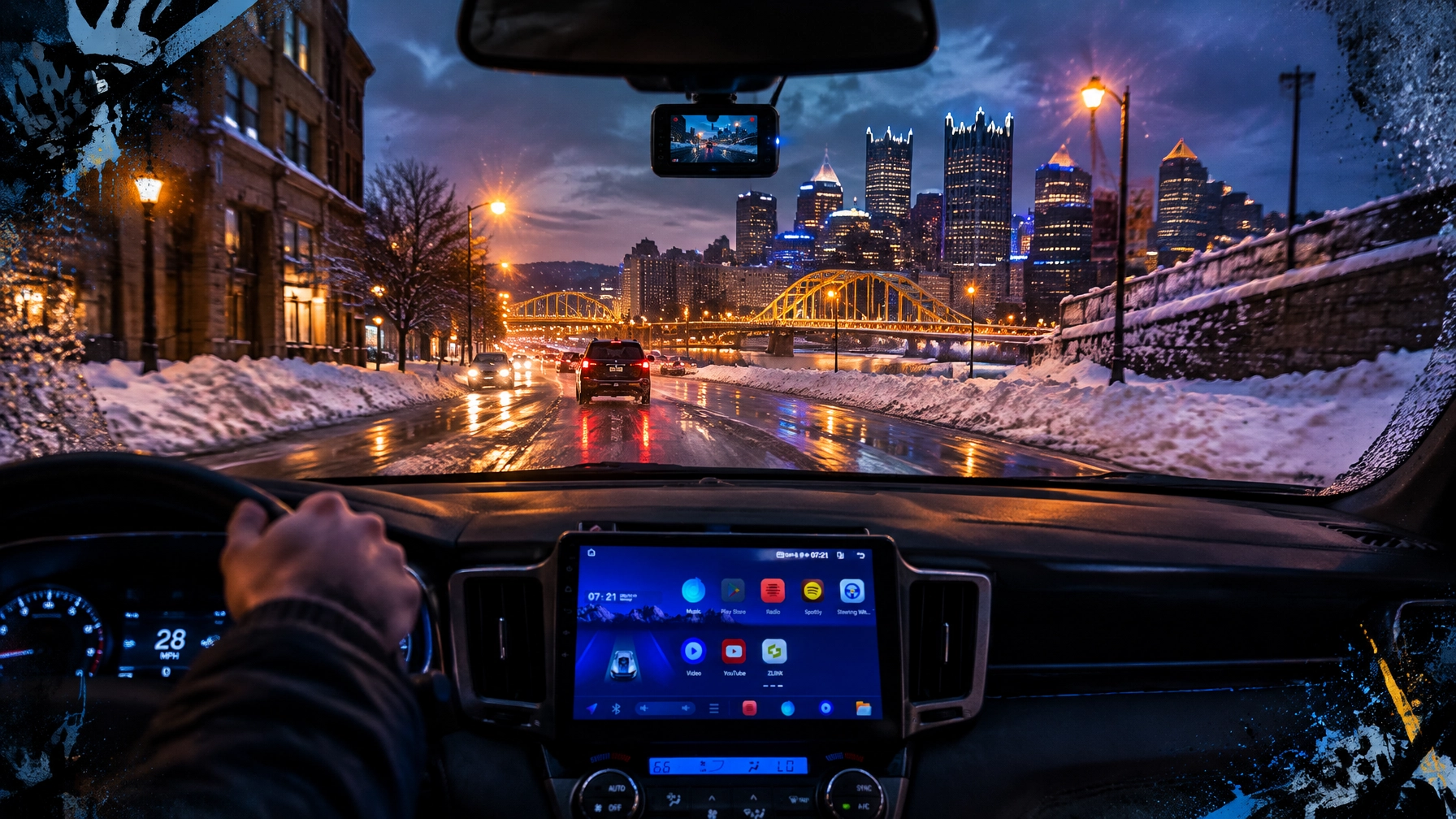
Backup Cameras & Dash Cams for Winter Driving
Winter driving can turn an ordinary trip into a whole lot more to manage. Snowbanks block your view. Parking lots turn slick. Holiday traffic gets hectic, and, by the time you spot the problem, it may already be too late to react.
That’s where backup cameras and dash cams can make a real difference. One helps you see behind your vehicle while reversing. The other records what happens on the road, and, with the right setup, while you’re parked.
They’re not a substitute for clearing your windows, checking your surroundings, or driving carefully. But they can give you better visibility and a helpful record when winter conditions make things tricky. That’s a practical safety upgrade for your daily driver, and a pretty great gift for a new driver or parent on your list, too!
Backup cameras: a little more visibility when you need it
A backup camera shows the area directly behind your vehicle on a head-unit screen or a dedicated mirror display. That view can be especially helpful when a snowbank, parked vehicle, or other obstacle makes it tough to see what’s behind you.
But remember: a camera only shows what its lens can see. It may not catch someone approaching from the side, a child or pet close to the bumper, or an obstacle hidden beyond a snow pile. If your view is blocked, get out and check before reversing. Use your mirrors, look over your shoulder, and back up slowly.
Winter can also make a camera image harder to use. Snow, salt, slush, and grime on the lens may blur the picture or cover it completely. And when the light’s low, a camera and its display need to provide a clear enough view to be useful. Keep the lens clean, check image quality at night, and make sure the screen is easy to see in your vehicle.
The camera is one more set of eyes, not a reason to skip your own.

Head-unit screen or mirror display?
Depending on the vehicle and system, the rear-camera image may appear on an integrated head unit or a replacement mirror display. The right fit depends on your vehicle, existing electronics, and what’s easiest for you to see without taking your attention off the road.
If you’re considering a screen upgrade alongside a camera, explore Team Nutz’s vehicle electronics and audio options. A professional installer can help determine what works with your vehicle and how to keep the result clean and convenient.
Dash cams: your quiet witness on winter roads
A dash cam records your drive so you have footage to review if something happens. Winter brings plenty of moments you’d rather not have to explain from memory: a parking-lot bump, a sudden stop in holiday traffic, or a dispute about how a collision occurred.
A front camera records what’s ahead. A front-and-rear setup can provide more context if a vehicle hits you from behind or an incident happens behind your car. Coverage depends on the camera and installation, so it’s worth discussing how you drive and park before choosing a system.
Want a closer look at the basics? Read our recent guide, Dash Cams: Your Silent Witness on Pittsburgh Roads.
Parking mode: what hardwiring changes
Parking mode can let a compatible dash cam monitor your vehicle after you turn it off. A 12V plug alone doesn’t guarantee parking surveillance. In some vehicles, the outlet switches off with the ignition; in others, it may stay powered. Either way, the camera needs a compatible power setup to record while parked, and continuous power without proper protection could drain the battery.
A hardwire kit can connect a compatible camera to the vehicle’s electrical system for driving and parking modes. It should be installed with a low-voltage cutoff, which tells the camera to stop drawing power if the battery drops to the configured limit. That protection matters in cold weather, when a vehicle battery may have less starting capacity.
Follow the camera and vehicle manufacturers’ guidance for the system and cutoff settings. Parking mode is not unlimited surveillance: the camera can only run as long as the power setup safely allows.
Clean installation matters, especially in winter
A camera is only useful if it’s positioned well and works reliably. Poor placement can leave you with a limited view, a screen that’s awkward to check, or a camera mounted where it obstructs your sightline. Exposed cables can look messy and get in the way, too.
A professional installation can help with:
- Camera placement chosen for a useful view without blocking the driver’s line of sight
- Clean cable routing behind trim, rather than loose wires across the cabin
- Proper power connections for driving and compatible parking modes
- Testing to confirm the image, recording, and power behavior work as expected

Backup-camera installation can involve integrating the camera with a head unit or mirror display, depending on the vehicle and equipment. Dash cams may need front and rear cameras positioned and tested separately. A tidy, vehicle-appropriate install is about more than looks. It’s about helping the system do its job without creating distractions.

A practical winter upgrade, and a thoughtful gift
If you’re weighing backup camera installation in Pittsburgh or searching for dash cam installation near me, think about where you’d benefit most: reversing around snowbanks, getting a record of the road, or monitoring a parked vehicle with a compatible system.
These can also make useful gifts for a new driver, a family member commuting through winter weather, or a parent who wants a little more visibility and documentation on the road. It’s a practical project they can appreciate every time they get behind the wheel.
At Team Nutz, we’ve been serving drivers since January 2001-25 years in business in 2026. Our shop has a 4.9-star rating and 1,200+ reviews, MECP-certified technicians, a 1-year in-house labor warranty, and the manufacturer’s lifetime warranty on parts. We’ll help you talk through the options for your vehicle and the installation you have in mind.
Ready to improve your winter visibility?
Let’s find a camera setup that fits your vehicle and how you use it. CALL/TEXT Team Nutz at 412-882-8346 or email sales@teamnutztechnology.com to discuss your project.
Cameras and remote start pair up nicely, too. A remote starter warms the cabin and clears the glass while the cameras keep recording. One appointment, a much easier winter.
Team Nutz LLC
3287 Library Road (Route 88)
Castle Shannon / South Hills of Pittsburgh, PA 15234
Business hours: Monday–Friday, 9 AM–6 PM; closed Saturday and Sunday. Our 24/7 call center can take your message anytime, with a callback the next business day.
Welcome to the TEAM!!!
Are backup cameras worth it for winter driving?
They can make it easier to see directly behind your vehicle when reversing, especially when snowbanks or parked cars limit your view. Keep the lens clear and remember to check around the vehicle: a camera can’t show everything.
Do dash cams work in cold weather?
They can, but operating limits vary by camera, so check the manufacturer’s specifications for your model. Cold can also affect your vehicle battery, which is why parking-mode setups should include an appropriate low-voltage cutoff.
How much does dash cam installation cost?
It depends on your vehicle, the camera system, whether you want front-and-rear coverage, and whether you need hardwired parking mode. Contact Team Nutz for a quote based on your vehicle and project: we won’t guess at a price without the details.